
Can AI Write Your Will? The Risks of Online Estate Planning in Kentucky
Why AI-Generated Wills Are Tempting (and Dangerous)

Wornall & Blair
There is a version of the future the technology industry wants you to believe in. It suggests that artificial intelligence is now so capable that expensive, time-consuming professions like law are essentially finished. Why pay a Louisville estate planning attorney when a chatbot can produce a ten-page document in forty-five seconds? Why schedule a consultation when an app asks you the same questions for free?
It is a compelling story. It is also, in the specific and consequential domain of estate planning, dangerously incomplete. Your estate plan is your voice when you are not present. You want to ensure that your voice remains your voice. We want to be honest about what AI can do, because it is a lot. We also want to be honest about what it cannot do, because the gap between those two things is where real families lose real money, real inheritances, and real peace.
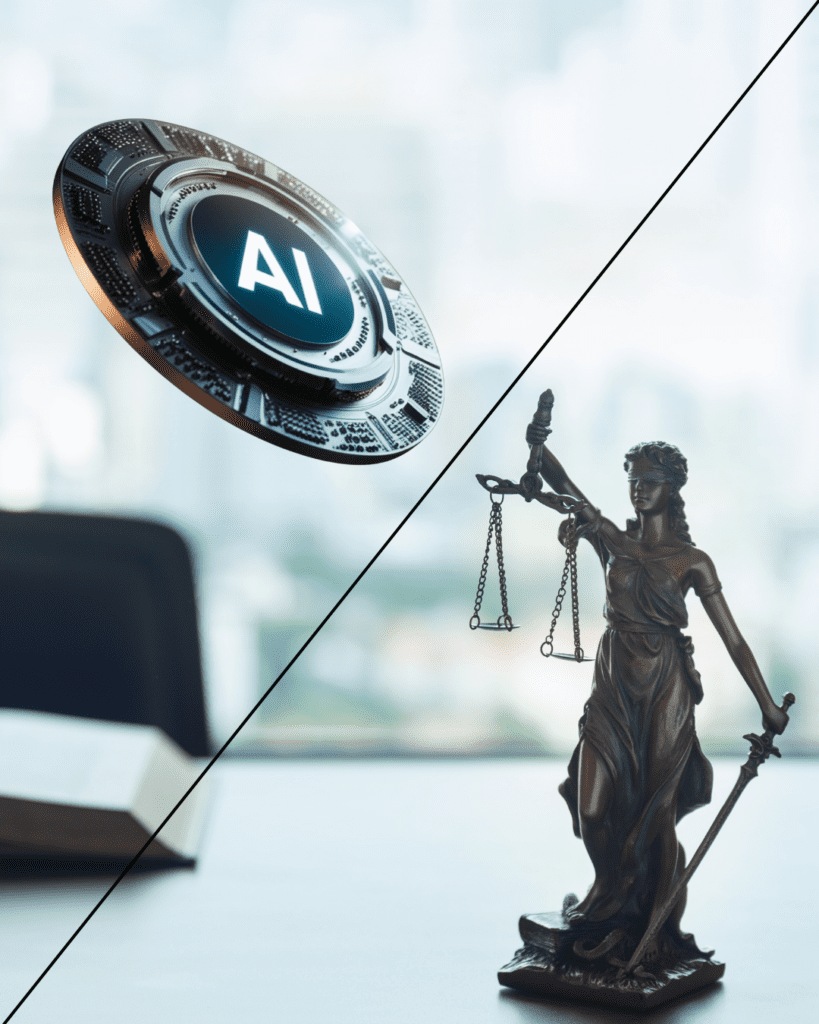
AI-Generated Will vs. a Kentucky Lawyer: What’s the Difference?
Artificial intelligence, in its current form, is an extraordinarily sophisticated pattern-recognition engine. It has been trained on an enormous body of text and has learned, with remarkable fidelity, how legal language sounds. It can produce a document that looks like a will, reads like a will, and contains the kinds of provisions a will typically contains.
This is genuinely impressive. It is also not the same thing as legal counsel. A will produced by an AI is the product of pattern-matching. Even if a document is 99% accurate, that 1% could be a partial or complete undoing. For example, it may fail to reflect that Kentucky still requires two disinterested witnesses and a notary for a self-proved will. It may not account for Kentucky’s elective share statute, which gives a surviving spouse rights regardless of what the will says.
An AI will not know that you have a son with a history of substance abuse, and that an outright inheritance would be a curse. That requires a carefully tailored structure reliant on the human element. AI produces a document. Counsel produces a plan. These are not the same thing.
How Online Wills Fail: Common Mistakes We See in Kentucky
We see the results of self-drafted and AI-generated estate planning documents with some regularity. The failures are often quiet, surfacing only after someone has died and the family is left to sort out what was meant and what the law will actually enforce.
- Execution Defects: Kentucky has specific requirements for how a will must be signed and witnessed to be valid. A document platform gives you a PDF and generic instructions. If the instructions are followed imprecisely, the document may be worthless. The error will not be discovered until probate, when it is too late to fix.
- Ambiguous Language: Legal documents are precise. A provision that says “I leave my estate to my children equally” sounds clear until it is not. Does it include stepchildren? Adopted children? A child born after the will was executed? These are the actual disputes that end up in Kentucky probate courts, consuming the very estate that was supposed to pass cleanly to the next generation.
- Failure to Account for Beneficiary Designations: This is perhaps the most common and costly mistake. Your will does not control your retirement accounts, life insurance, or any asset with a named beneficiary. If your beneficiary designations are outdated, your will is entirely irrelevant to those assets. An AI that generates a will has no duty to know what your beneficiary designations say.
Is a Cheaper Online Will Worth the Risk to Your Family?
We understand the appeal. The cost of legal services is real. The inconvenience of scheduling consultations is real. But consider what you are actually doing when you write your will. You are making the most consequential set of decisions available to a living person. You are arranging for your absence under conditions that guarantee you will never be able to correct a mistake.
The will that costs you nothing to produce may cost your family everything to unravel. The probate litigation that follows a poorly drafted document routinely exceeds, by orders of magnitude, what proper planning would have cost. The family relationships fractured by ambiguous language cannot be repaired with a settlement check. Convenience is a dangerous primary value when the stakes are this high.
How Wornall & Blair Uses Technology to Serve You Better
In the interest of intellectual honesty, let us say plainly what AI does well. It is a remarkable research and ingestion tool. Used as a tool in the hands of a competent attorney, it makes legal work more efficient. It is useful for education. A client who wants to understand what a pour-over will does, or how a revocable living trust differs from a testamentary trust, can get a reasonable primer from an AI chatbot. That education makes the subsequent conversation with counsel more productive.
What it is not, what it cannot be, is the thing that knows your family, your assets, your fears, your history, and your state’s law well enough to build a plan that actually protects you. That requires a human being with professional training, professional accountability, and the professional obligation to ask the questions you did not think to raise.

Schedule a Consultation with a Louisville Estate Planning Attorney
Here is what we find when we have the longer conversation with clients who tried to handle their estate planning online: what held them back was not primarily the cost. It was avoidance. It was the discomfort of talking about dying, about complex family dynamics, about what happens if the business fails or the child you love makes choices you would not choose for them.
That discomfort is not a bug, but a blessing. It is the friction that produces the honest reckoning that produces the plan that actually works. An attorney doing this job well is not just a document production service. They are the person who asks the questions you would rather avoid and builds something from the truth of your situation. You can read more of our thoughts at The Counselor’s Corner.
If you have an estate plan that was generated online, or that has not been reviewed in more than three years, we encourage you to have it reviewed. The robot is impressive. Let it impress someone else. Your family deserves counsel.